Introduction
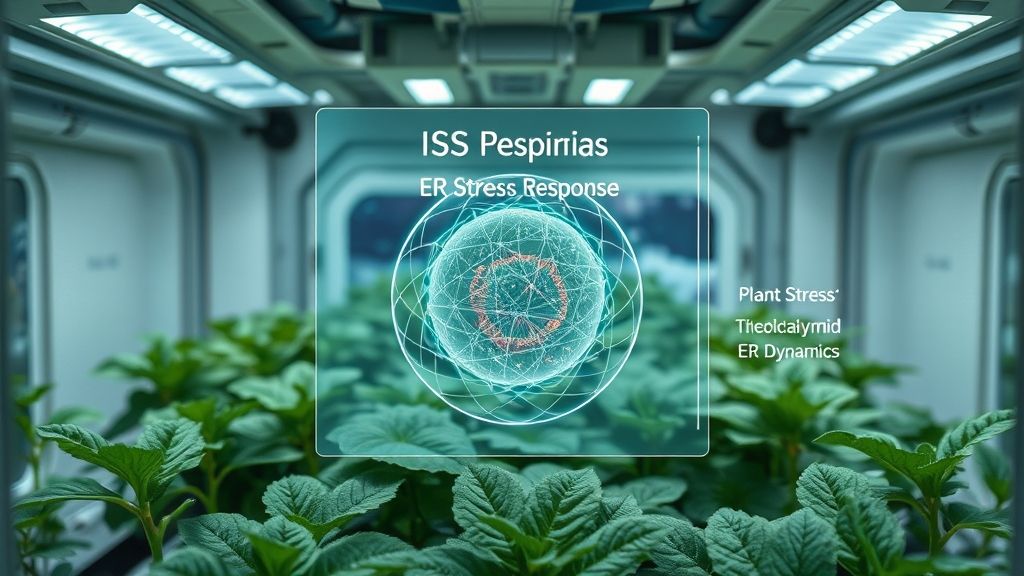
The endoplasmic reticulum (ER) is a dynamic organelle essential for life, traditionally known as the entry point for the secretory pathway. However, its function extends far beyond protein synthesis and transport. This editorial synthesizes findings from a special research topic, repositioning the ER as a central command center for sensing and responding to a wide range of environmental stressors in plants. Understanding these complex ER-mediated processes is crucial for engineering plants that can thrive in challenging environments, including the unique conditions of spaceflight and extraterrestrial habitats.
Research Objective
This editorial provides a comprehensive overview of the ER’s multifaceted role in plant stress biology. The primary goals were to:
- Summarize current knowledge on ER architecture, dynamics, and its physical interactions with other organelles.
- Review the key mechanisms of ER stress sensing, including the Unfolded Protein Response (UPR) and ER-Associated Degradation (ERAD).
- Detail the ER’s involvement in plant immunity, viral pathogenesis, and the regulation of Programmed Cell Death (PCD).
Key Findings
The collection of reviewed articles establishes the ER as a critical nexus for stress adaptation through several key functions:
- ER Network Dynamics: The shape and movement of the ER network are actively controlled by myosin XI motor proteins. This dynamic remodeling is not just for internal housekeeping but is crucial for communication with other organelles and responding to cellular needs.
- Protein Quality Control: Under stress, the demand for protein synthesis can overwhelm the ER’s folding capacity, leading to an accumulation of misfolded proteins. The ER employs a sophisticated ER quality control (ERQC) system to identify and remove these faulty proteins via ERAD, thereby maintaining cellular homeostasis.
- Stress Signaling: When stress becomes overwhelming, ER-resident sensor proteins activate the UPR. This signaling cascade, involving factors like the bZIP28 transcription factor, communicates the stress state to the nucleus to launch a broad transcriptional program aimed at restoring ER function.
- Immunity and Pathogenesis: The ER is a key battleground for plant-pathogen interactions. It is essential for synthesizing immune receptors, but is also a target for viruses that hijack the ER’s machinery to replicate their own proteins, often triggering the UPR to their advantage.
- Cell Fate Determination: If stress is too severe or prolonged for adaptive responses to handle, the ER can initiate PCD. This controlled cell death is vital for development and for containing the spread of pathogens.
Methodology
This publication is an editorial that synthesizes and reviews a collection of primary research and review articles.
- Organisms Studied: The summarized research primarily focuses on the model plant Arabidopsis thaliana and other plants within the Brassicales order.
- Experimental Approach: The work consolidates findings from various experimental approaches, including advanced live-cell imaging to observe ER dynamics, genetic analysis of knockout mutants, and molecular biology techniques to dissect stress signaling pathways.
Importance for Space Missions
The ER’s role as a primary stress sensor makes it a critical area of study for NASA’s long-term exploration goals.
- Life Support Systems: Understanding plant ER stress responses is fundamental for developing robust bio-regenerative life support systems. Plants grown in space will face a unique combination of stressors, including microgravity, radiation, and altered atmospheric conditions, all of which impact ER function.
- Crop Resilience: By targeting ER-related genes, it may be possible to engineer crops with enhanced tolerance to the spaceflight environment. This could improve the reliability and yield of in-space agriculture, a cornerstone for astronaut nutrition and self-sufficiency on missions to the Moon and Mars.
- Plant Health in Closed Environments: Insights into ER-mediated immunity are vital for managing plant diseases within the confined habitats of a spacecraft or planetary base, ensuring the health and productivity of food crops.
Knowledge Gaps & Future Research
While our understanding of the ER has grown, significant questions remain that are critical for future research:
- What are the precise molecular signals that determine whether a cell activates an adaptive UPR or commits to programmed cell death?
- How do the physical dynamics and architecture of the ER network directly influence the speed and effectiveness of a stress response?
- What is the complete range of functions for specialized ER-derived compartments, such as ER bodies, particularly in response to abiotic stressors relevant to space (e.g., radiation)?
- How can we effectively translate the fundamental knowledge from model plants like Arabidopsis into practical applications for improving key food crops intended for space agriculture?
Results
This collection of research solidifies the endoplasmic reticulum’s status as a highly versatile and intelligent organelle, acting as an intracellular stress sensor that initiates and regulates adaptive responses. A deep understanding of the molecular processes governing ER function and its architectural dynamics is paramount for developing sustainable agriculture on Earth and for ensuring the success of plant-based life support systems in the hostile environment of space. Future research in this field will be essential for pushing the boundaries of space exploration.